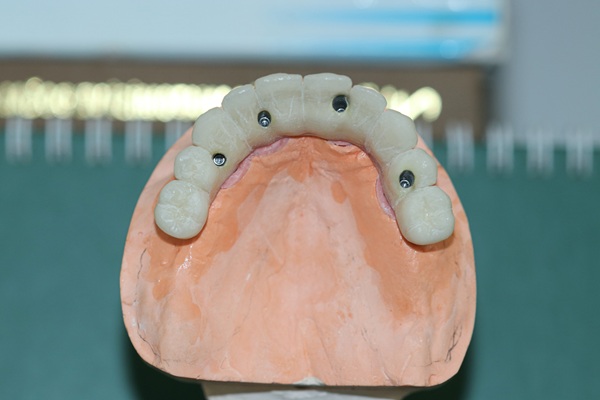
Restoring a full arch of missing teeth once required removable dentures or extensive procedures involving multiple dental implants. Today, All-on-X Implants offer a modern alternative that blends stability, efficiency, and aesthetics. These fixed implant-supported prosthetics use strategically placed implants to support an entire set of upper or lower teeth, helping patients regain both function and confidence.
What are all-on-X implants?
All-on-X implants refer to a full-arch restoration supported by as few as four dental implants, although some cases require more—hence the "X" in the name. Unlike traditional dentures that rest on the gums, All-on-X restorations anchor directly to the jawbone, creating a secure, natural-feeling fit. This method requires the dentist to surgically insert titanium posts into the jawbone to support a custom bridge of artificial teeth.
Key advantages of all-on-X implants over traditional dentures
All-on-X implants address several common concerns associated with conventional dentures. Patients who choose this method often report:
- Greater stability: Unlike dentures that shift during eating or speaking, these implants remain fixed in place.
- Enhanced comfort: The design avoids gum irritation and pressure points common with removable prosthetics.
- Improved jawbone health: The implant posts stimulate the jawbone and help reduce bone loss over time.
Additionally, all-on-X prosthetics streamline the process. More often than not, patients will closely follow their tentative treatment and healing schedule. Of course, all schedules will vary for each patient depending on how well they follow post-operative instructions, their body's healing ability, and their personal schedule.
The all-on-X implants treatment process
Unlike most dental treatments, all-on-X implants require a phased treatment plan. Patients can expect the following:
Candidacy consultation
Note that not everyone is eligible for all-on-X implants. Therefore, the dentist requires all patients to undergo a consultation that includes a physical examination, a review of medical and dental history, and diagnostic imaging. Primarily, the dentist needs to ensure the patient has sufficient amounts of bone density in the areas where they will place the titanium posts. However, they also want to ensure each patient leads a nicotine and tobacco-free lifestyle to ensure optimal healing abilities and reduced risk of implant rejection. Lastly, they will ensure they address any issues, such as infections, before scheduling the first surgery.
Post placement
After confirming candidacy, the dentist will schedule the first of two surgeries: the titanium post placement. During this appointment, the dentist will provide a numbing agent to prevent discomfort throughout the procedure. Once numb, they will make multiple incisions in the gum line where they intend to place the post. Next, they create small holes in the jawbone and screw the posts in place. At the end of the appointment, the dentist will suture the gum tissue back over the jawbone to promote osseointegration.
Osseointegration
The osseointegration process refers to the time it takes for the titanium posts to integrate, or fuse, with the jawbone. For some patients, this process can take three months. However, it can take up to six months for others. Note that at this time, patients will have a temporary restoration to better help their oral function and maintain regular checkups to ensure they are progressing as they should.
Abutment placement
Some dentists place the abutment during the same appointment as the post placement, while others choose to wait until after osseointegration is complete. If this portion involves another appointment, the dentist will reopen the gumline to connect the abutments to the titanium posts. The abutment serves as an anchor for the permanent restoration, for which the dentist will get measurements during the same appointment.
Permanent restoration placement
The healing phase after the abutment placement only lasts a few weeks. Afterward, the patient will return for the bonding of the final restoration. Again, the restoration will be a dental bridge, which can replace up to four consecutive missing teeth, or dentures, which can place a full arch. Regardless, the patient will receive a permanent, full-functioning, natural appearing smile.
Caring for all-on-X implants
Maintaining all-on-X implants involves daily oral hygiene and regular dental checkups. Although the prosthetic teeth are not natural, they still require cleaning to prevent plaque buildup and inflammation around the implants. Recommended care includes brushing twice daily with a soft-bristled toothbrush, using a water flosser or interdental brush to clean beneath the prosthesis, and attending follow-up visits for professional cleanings and implant checks. Patients should also avoid using their teeth to open objects or chewing excessively hard foods that may place stress on the restoration.
Determine if all-on-x implants are suitable for you
All-on-X implants provide a transformative solution for patients seeking full-arch restoration without the drawbacks of removable dentures. Are you interested in learning if these implants are right for you? Contact Culver City Dental and schedule a consultation.
Request an appointment here: https://www.culvercitydental.com or call Culver City Dental at (310) 272-5405 for an appointment in our Culver City office.
Check out what others are saying about our dental services on Yelp: All-on-X Implants in Culver City, CA.
Recent Posts
Choosing the right tooth replacement option is an essential part of maintaining your long-term oral function and confidence in your smile. All-on-X is a modern alternative to traditional dentures, offering a more permanent and stable solution for those with missing teeth. When comparing All-on-X with traditional dentures, there are several key differences in function, comfort,…
Dental implants are a permanent, functional solution for patients with tooth loss in one or both dental arches. Both partial and full arch dental implants have become more accessible, customizable, and successful for a wide range of patients. However, they have different uses and candidacy requirements. Understanding the differences between these options helps clarify which…
Dental implants provide a durable and natural-looking solution for missing teeth, but they do not work on their own. An implant crown serves as the final step in this process, completing the restoration and restoring smile function, appearance, and confidence. They mimic the appearance and strength of natural teeth to integrate with the rest of…
Do you need a dental implant? Read on to learn more about this type of dental restoration. Removable partial dentures and a fixed dental bridge not supported by implants are not considered permanent restorations. However, a dental implant restoration is considered permanent, as it essentially uses the same structure as a natural tooth.The benefits of…