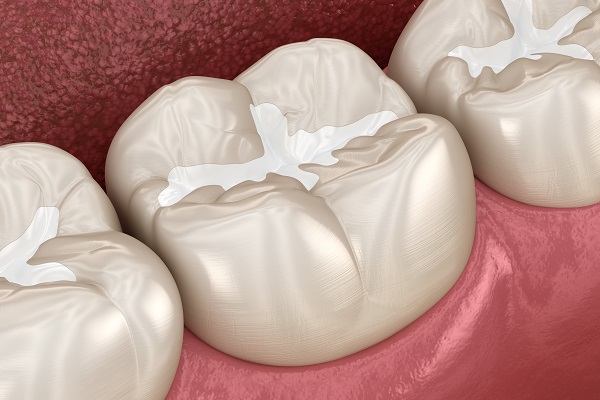
Cavities, also known as caries or tooth decay, form when plaque eats away at the enamel that covers the teeth’s outer surfaces, so it is essential to see the dentist immediately for a dental filling or other treatment alternatives if you suspect cavities on your teeth. Cavities may spread and harm the sensitive tissue and nerves deep inside your teeth if not treated quickly. Serious consequences, like nerve injury and tooth loss, may be avoided when cavities are treated early.
Treating cavities
If a cavity is addressed early, extensive care might not be necessary. Patients should see their dentist twice a year for a regular dental cleaning in order to prevent and detect tooth decay. Depending on the extent of the tooth damage, patients may need one or more of the following treatments:
Fluoride treatment: The dentist might apply fluoride varnish over the tooth to rebuild the tooth enamel in the early stages of a cavity and probably reverse the damage.
Dental Fillings: When the decay gets to the point that there is a hole in the enamel, the dentist will recommend restoring the tooth with dental fillings. Composite resins, porcelain, and dental amalgams are all options for filling cavities in teeth.
Dental assessment, X-rays, and treatment plan
The dentist will inspect the tooth to assess the degree of tooth decay. An X-ray may be necessary if the dentist feels that the tooth cavity is deep. Another option for evaluating the health of all the teeth is a panoramic X-ray, which provides a complete image of the patient’s dentition.
Minor cavities and fractures in the teeth are best treated with dental fillings. Patients and the dentist work together to choose the best dental filling to fill and seal a cavity. Tooth-colored fillings are often preferred.
Remove the cavity in the tooth
For severe tooth decay, the dentist will typically administer a local anesthetic to numb the region before starting the decay removal process. Cavity treatment is often performed on the surface of the tooth; therefore, local anesthetic is not usually required.
The dentist will remove the decaying or damaged portion of the tooth with a drilling handpiece. They will remove leftover bacteria or debris by thoroughly cleansing and disinfecting the area. They will apply adhesives, followed by the filling material. A blue-colored bonding light is used to harden composite material.
Dental filling options
Fillings have improved in recent years, and there are now several choices available in addition to standard metal fillings.
Amalgam fillings
Amalgam has been used to fill holes for more than a century and is still commonly utilized today. Amalgam is a tough mix of mercury, silver, tin, copper, and other metals. Amalgam fillings are not usually recommended for the more visible teeth in front of the mouth because of their silver hue.
The safety of amalgam has been questioned because it contains mercury. However, studies conducted by the National Institutes of Health, the Food and Drug Administration, and other major health agencies have concluded that dental amalgam is a safe filling material. The other metals used in amalgam fillings help stabilize the mercury and prevent side effects.
Composite fillings
Composite is a tooth-colored substance consisting of glass or quartz combined with resin. Composite fillings last longer and appear more natural than amalgam fillings. They usually cost more than amalgam fillings, though, and the process takes longer. Composite fillings might also discolor over time.
Glass ionomer fillings
Glass ionomers, like composite fillings, have a tooth-colored appearance. They are most often used to treat decay around the tooth roots and are constructed of acrylic and glass. Glass ionomers may also emit fluoride, which can help protect the teeth from decay. Since glass ionomers are not as long-lasting as amalgam or composite fillings, they should only be placed on parts of the teeth that are not subjected to much chewing friction.
Resin Ionomer fillings, like glass ionomers, are natural-looking fillings constructed of acrylic and glass filler. They are often used to fill tiny cavities between teeth or root surfaces.
Final thoughts
Food and drink may wear down the filling materials, as can clenching and grinding the teeth. Damaged or worn-down fillings may allow the invasion of bacteria, resulting in further tooth decay and ultimately, the need for extraction. Since you may not notice THAT your filling is deteriorating, it is advisable to book regular dental appointments.
If you have a cavity, visit the dentist to discuss your choices and the pros and cons of the different filling methods. Your dentist can help you select the ideal dental filling after assessing your overall dental health and preferences.
Request an appointment here: https://www.culvercitydental.com or call Culver City Dental at 3102725405 for an appointment in our Culver City office.
Check out what others are saying about our dental services on Yelp: Dental Fillings in Culver City, CA.
Recent Posts
Most people will experience at least one dental cavity in their lifetime. Fortunately, tooth-colored fillings can be used to treat tooth decay with natural-looking results. The care required for fillings is minimal; most people forget about them after a few weeks. However, choosing healthy lifestyle habits can help keep tooth-colored fillings in excellent shape, allowing…
Composite fillings, especially newer ones, are reasonably strong and durable, but they can wear out over time. Excess pressure, such as may occur when you grind your teeth, can cause them to wear out more quickly. Poor dental hygiene may contribute to decay that can compromise fillings. A filling that is loose is not a…
If you have cavities caused by tooth decay, composite fillings can be used to fill the hole, protect your teeth, and restore your smile. Many people prefer this option because it has a more natural appearance and does not create an eyesore. Others prefer them because they do not contain the same ingredients as traditional…
Composite fillings are made of plastic resin and glass particles mixed together. Your dentist may offer you composite dental fillings if they think you would benefit from them. You can ask your dentist for a composite filling, and if they do not think it would be of benefit to you, they will let you know…