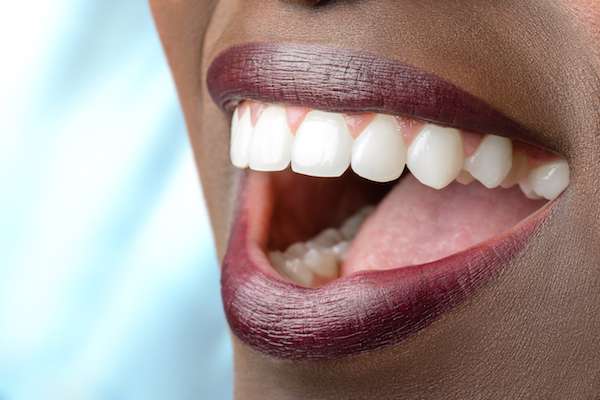
Using dental fillings to treat cavities is one of the most common types of routine dental care. The American Dental Association reports that approximately 91% of adults will experience at least one cavity in their permanent teeth at some point in time. Fortunately, the high demand for this type of dental work has led to developments that offer patients more options when treating tooth decay.
Routine dental care for cavities
Before a cavity can be filled, the decay must be removed from the tooth. While traditional drills are still used in many locations, some offices now offer laser dentistry for this step. This can help speed up the process while offering precise results with less noise. Once the tooth is free of decay, a filling is used to restore the shape and function of the tooth.
Types of dental fillings
When it comes to choosing the right type of dental filling for a cavity, patients now have several options. Currently, most people opt for tooth-colored fillings for a more discreet result. However, in certain situations, a metal filling may be the more appropriate choice. A dentist can help patients make the most appropriate selection based on age, dental history and the location of the affected tooth.
Tooth-colored materials
When a cavity is filled using a tooth-colored material, the results are more natural looking and less noticeable. Most patients prefer this option when receiving routine dental care for decay towards the front of the mouth. However, some patients can also enjoy the discretion of these materials on back teeth when decay is not too severe. Tooth-colored fillings can be made of:
- Porcelain/ceramic
- Resin composite (a combination of porcelain and plastic)
- Glass ionomer (a combination of acrylic and glass, infused with fluoride)
While porcelain and resin composite are used on exposed tooth areas, glass ionomer fillings are typically used to treat decay below the gum line.
Composite fillings, a popular choice among dentists and patients, can be easily adjusted to match the natural shade of a person's teeth. This type of repair usually lasts for approximately five years in adults with proper oral care. Porcelain fillings, which can also be tinted for a realistic finish, tend to last between 10 and 15 years in a healthy adult.
Check out what others are saying about our dental services on Yelp: Routine Dental Care in Culver City, CA.
Amalgams and metals
Traditional fillings were made from amalgam, a combination of silver, tin, copper, mercury and zinc. Patients can also request gold fillings. Both materials are still considered safe by the FDA and are incredibly durable, lasting around 15 years in most patients.
Due to its longevity, amalgam is still used for severe decay in some children. However, the silver appearance can be unsightly. In situations that require the strength of metal, a composite filling can be reinforced with stainless steel, offering patients the best of both worlds when needed.
Conclusion
Cavity treatment is a form of routine dental care that most adults will deal with at some point in life. Fortunately, there are tooth-colored filling options that can help make the work appear more natural. A dentist can offer guidance when making the appropriate choice for a patient's needs.
Request an appointment or call Culver City Dental at 310-272-5405 for an appointment in our Culver City office.
Recent Posts
Composite fillings are a commonly used option for fixing a variety of problems with the teeth. Your dentist may give you the choice between composite fillings and various other materials to use for your teeth. Each option comes with slightly different parameters for how long the filling will last and what you will need to…
Wondering when dental crowns are recommended? Read on to learn more about this dental restoration. Healthy teeth are crucial components of one's body and play a significant role in overall health. However, many individuals either lack access to dental care or postpone appointments, believing they can address oral health issues later. This delay can lead…
Are you looking for teeth whitening solutions but have sensitive teeth that make it difficult? If so, you are not alone. Many people struggle to find the best whitening option for their sensitive teeth, but luckily there are a few options that can help you achieve a brighter smile without causing extra sensitivity.If you have…